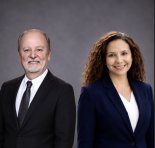
Featured Speakers:
Dr. David J. Earnest, Ph.D | Karienn A. De Souza, Ph.D
Dr. David Earnest, Ph.D is Professor Emeritus in the Department of Neuroscience and Experimental Therapeutics. He received his doctoral degree from Northwestern University with post-doctoral training at the University of Rochester. Dr. Earnest has over 40 years of experience in the application of multidisciplinary approaches to study the function of circadian clocks in the suprachiasmatic nucleus (SCN) and in peripheral tissues throughout the body, with specific expertise in the analysis of how shift work-related dysregulation of circadian rhythms contributes to human health disorders. Research investigations in his lab have pioneered the development of immortalized cell lines as models for identifying the diffusible factors mediating the local synchronization of cell-autonomous clocks in the SCN and SCN pacemaker coordination of peripheral oscillators. Current studies use animal models to study: 1) mutual interactions between the circadian clock mechanism, inflammatory signaling and gut dysbiosis; and 2) the mechanisms linking circadian dysregulation associated with shift work schedules to cerebrovascular disease, metabolic disorders and accelerated cognitive aging. Research studies examining the effects of shift work schedules on pathophysiology of stroke have been supported by funding from the National Institutes of Health and American Heart Association. Implications of this research for human health have been widely communicated through multiple interviews with local and national media outlets, including the Wall Street Journal, National Public Radio, Sirius Radio “Top of Mind with Julie Rose”, LA Times, NY Times, KBTX and KAGS TV, Huffington Post, and Redbook magazine. Dr. Earnest is a member of the Center for Biological Clocks Research (CBCR), which was established in 2003 to coordinate graduate training, research and outreach activities in circadian biology at Texas A&M University.
Karienn A. De Souza, PhD is a Research Assistant Professor in the Department of Neuroscience within the Naresh K. Vashisht College of Medicine, where she leads an independent and externally funded research program focused on Alzheimer’s disease, cognitive aging, and circadian neuroscience. She is widely recognized as an emerging leader in the field of circadian dysregulation and its role as a modifiable risk factor for age-related cognitive impairment.
Dr. Souza’s research integrates systems neuroscience, behavioral and cognitive modeling, circadian biology, and neuroinflammation to address critical gaps in understanding how disruptions in biological rhythms accelerate cognitive decline and vulnerability to Alzheimer’s disease. Her work places particular emphasis on aging-related mechanisms and therapeutics, sex differences, and translational relevance, positioning circadian health as a novel and actionable target for dementia prevention and intervention. She has established a strong record of competitive research funding as Principal Investigator and Co-Principal Investigator. In 2024, Dr. Souza was awarded a Department of Defense grant for her project, Circadian Dysregulation as a Risk Factor for Age-related Cognitive Impairment (2024–2027; $999,000; PI). She is also the Principal Investigator on a 2024 Texas Alzheimer’s Research and Care Consortium (TARCC) Grant, Impact of Pro-inflammatory Cell Expansion on Behavioral Dysfunction During Aging (2024–2026; $200,000), further advancing her work at the intersection of neuroinflammation and cognitive decline. Additionally, she served as Co-PI on a Wood Next Foundation Internal Grant (2022–2024; $150,000/year; 2026-2027; $250,000/year), investigating brain–gut interactions in circadian sleep disorders and aging-related cognitive impairment. More recently, Dr. Souza was awarded a DARI Research Grant from the Texas A&M University, for the project Disrupted Circadian Rhythms as a Driver of Inflammation and Cognitive Decline: Targeting Neuroimmune Mechanisms for Early Intervention (2026; $94,000.00), targeting microglial activation after circadian dysregulation. Notably, Dr. Souza has been invited to deliver multiple invited talks at national and international venues, including the prestigious International Chronobiology Gordon Research Conference, reflecting growing recognition of the important findings from her research program and leadership in the field of circadian neuroscience. Her research excellence was recognized with the 2025 Research Excellence Award for Research Scientists and APT Faculty from the Vashisht College of Medicine, underscoring the impact and trajectory of her scientific contributions. Her work has helped shape interdisciplinary collaborations across neuroscience, aging, immunology, and sleep biology, strengthening institutional initiatives in brain health research.Beyond her research program, Dr. Souza is actively engaged in academic leadership, mentorship, and collaborative science. She is committed to training the next generation of neuroscientists and fostering inclusive, interdisciplinary research environments. Through her involvement in large research consortia and community-facing initiatives, she also works to connect scientific discovery with public awareness, patient needs, and translational outcomes in Alzheimer’s disease.
Dr. Souza is regarded as a thoughtful, innovative scientist with a clear vision for advancing the field of circadian neuroscience and its application to neurodegenerative disease. Her work reflects a sustained commitment to scientific rigor, collaborative leadership, and impactful research that addresses one of the most pressing public health challenges of our time.